THE OIL ATLAS · Private preview
Termite oil
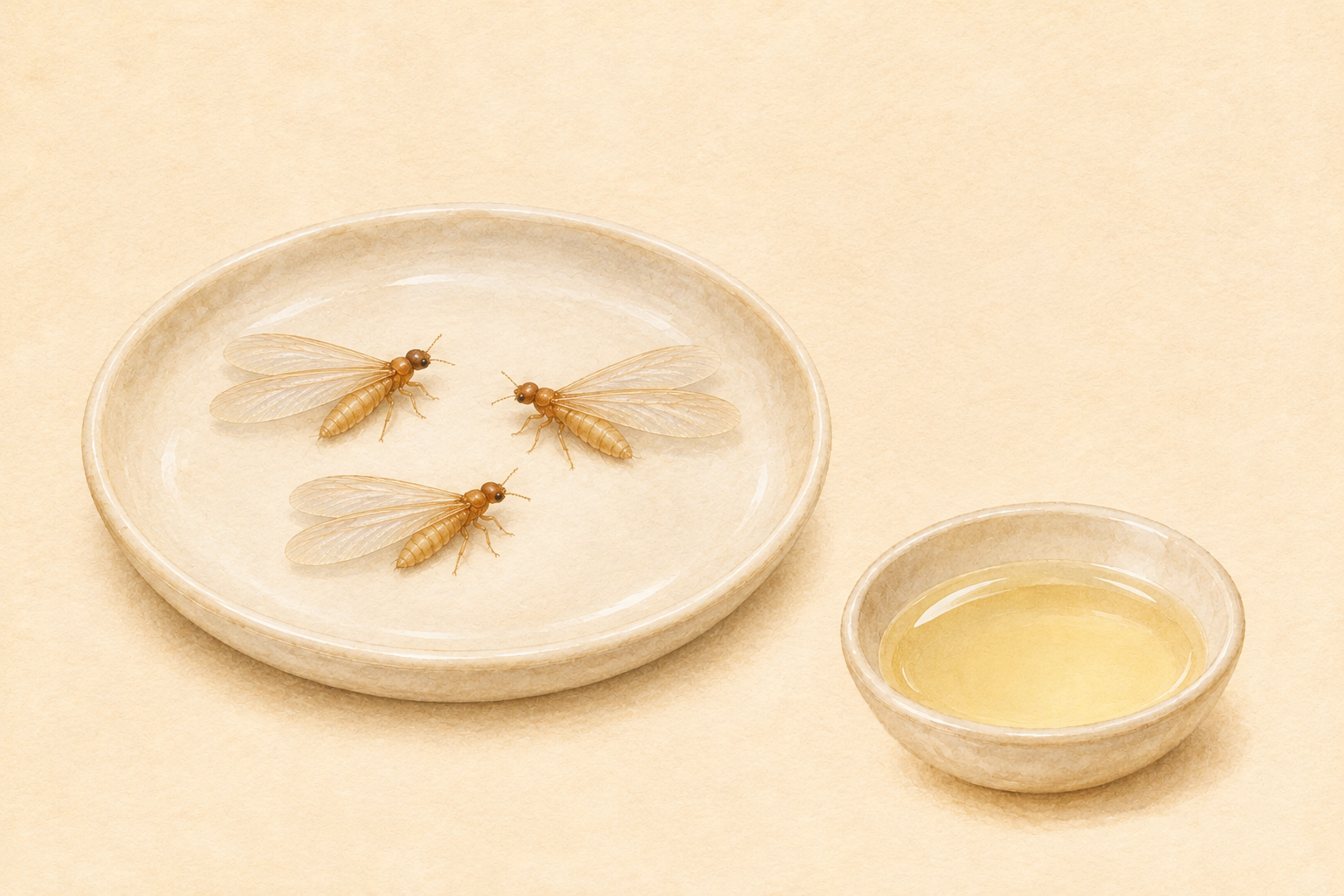
Overview
Termite oil is fat separated from edible termites. The FAO 2013 report documents the Azande and other forest communities in the Democratic Republic of the Congo frying meat in residual termite fat and describes pressing dried termites in a tube to extract oil. These practices are distinct from eating whole termites.
Source material
Edible termites. The FAO passage does not uniquely identify the species used for every oil-extraction practice, so nutritional figures for Macrotermes species are not treated as specifications for this oil.
Region
FAO documents use of termite fat by Azande people and forest communities in the Democratic Republic of the Congo. The geographic distribution of termite consumption does not establish the same oil extraction practice everywhere.
Food use
FAO section 2.3.3 (around printed page 26) records meat fried in residual termite fat. This documents use of the fat as a cooking medium, not merely consumption of whole fried termites.
Extraction
FAO (2013), section 2.3.3, records pressing dried termites in a tube to obtain oil. Box 9.1 separately describes cooking meat in fat left after frying termites. Pressed oil and residual frying fat are distinct preparations and are not assumed to have identical composition.
Safety
Identification of edible species, hygienic handling, allergen risks and storage require attention. Historical use in FAO does not establish the safety of every modern insect-oil product.
Sources
FAO (2013), *Edible insects: Future prospects for food and feed security*, Forestry Paper 171, §2.3.3, around printed p. 26 (frying in termite fat, tube pressing and species-specific nutritional values). https://www.fao.org/4/i3253e/i3253e.pdf