THE OIL ATLAS · Private preview
Soybean oil
Overview
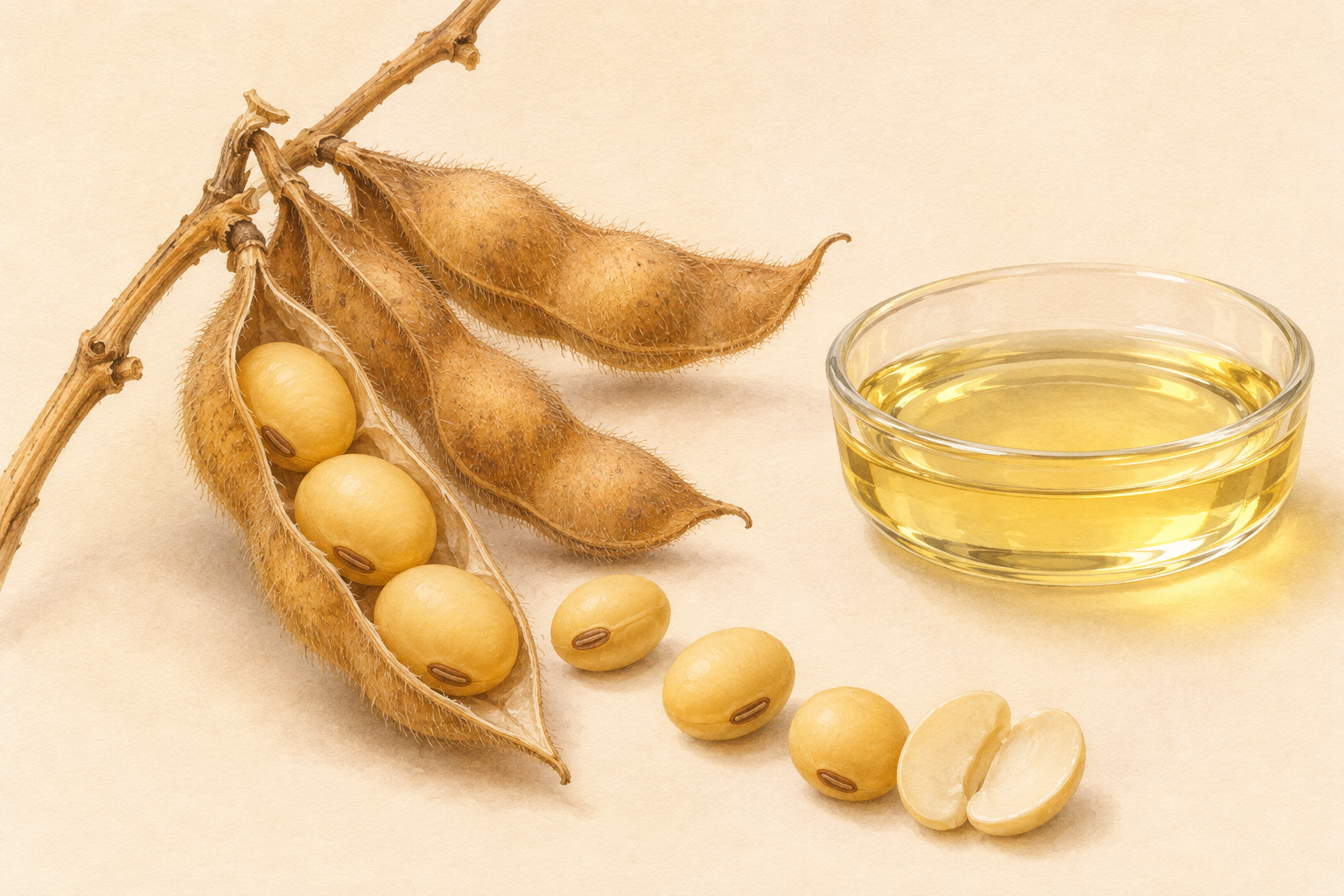
Soybean oil is an edible oil separated from soybean seeds. It is used both in heated home cooking and in processed foods such as mayonnaise and dressings. Conventional and high-oleic soybean oils have different fatty-acid profiles, so compositional figures must be matched to the oil type.
Source material
The source is the soybean (Glycine max (L.) Merr.). The use of whole beans in foods such as tofu is distinct from the established food trade in extracted and refined soybean oil.
Composition
A representative soybean-oil composition reproduced in an FAO processing manual reports oleic acid at 21.1%, linoleic acid at 52.4% and linolenic acid at 7.1%, by fatty-acid weight. These are literature example values, not fixed specifications for all products; cultivar and growing conditions affect composition.
In this cited sample, linoleic acid is the largest component, with oleic and alpha-linolenic acids also present. These percentages describe the fatty-acid profile, not a recommended amount of oil to consume.
Region
Soybean oil is a major internationally traded edible vegetable oil. An AOCS technical account describes Argentina as a producer that crushes soybeans and exports both oil and meal.
Food use
Refined soybean oil serves as a liquid cooking and frying oil and as an ingredient in dressings and processed foods. Uses of liquid oil should be distinguished from uses of specially modified fats in spreads.
Its main role is often to supply cooking fat rather than a pronounced finishing aroma. Labels should distinguish ordinary liquid oil from further-processed fat ingredients.
Extraction
Soybeans are prepared and oil is extracted, then processed through stages such as degumming, neutralisation, bleaching and deodorisation. FAO distinguishes alkali refining from physical refining, which remove free fatty acids by different mechanisms.
Soybean meal remaining after oil recovery is a separate product. The distinction between processing the bean and refining the extracted oil matters when assessing food uses.
Safety
Select food-grade oil and check applicable allergen labelling. Avoid prolonged or repeated overheating. Do not confuse ordinary liquid soybean oil with partially hydrogenated oils, which may contain industrial trans fats.
Sources
FAO, Technology of Production of Edible Flours and Protein Products from Soybeans, Chapters 1–2; AOCS, “Individual Commodity Oils and Fats”; Codex CXS 210-1999.