THE OIL ATLAS · Private preview
Lard
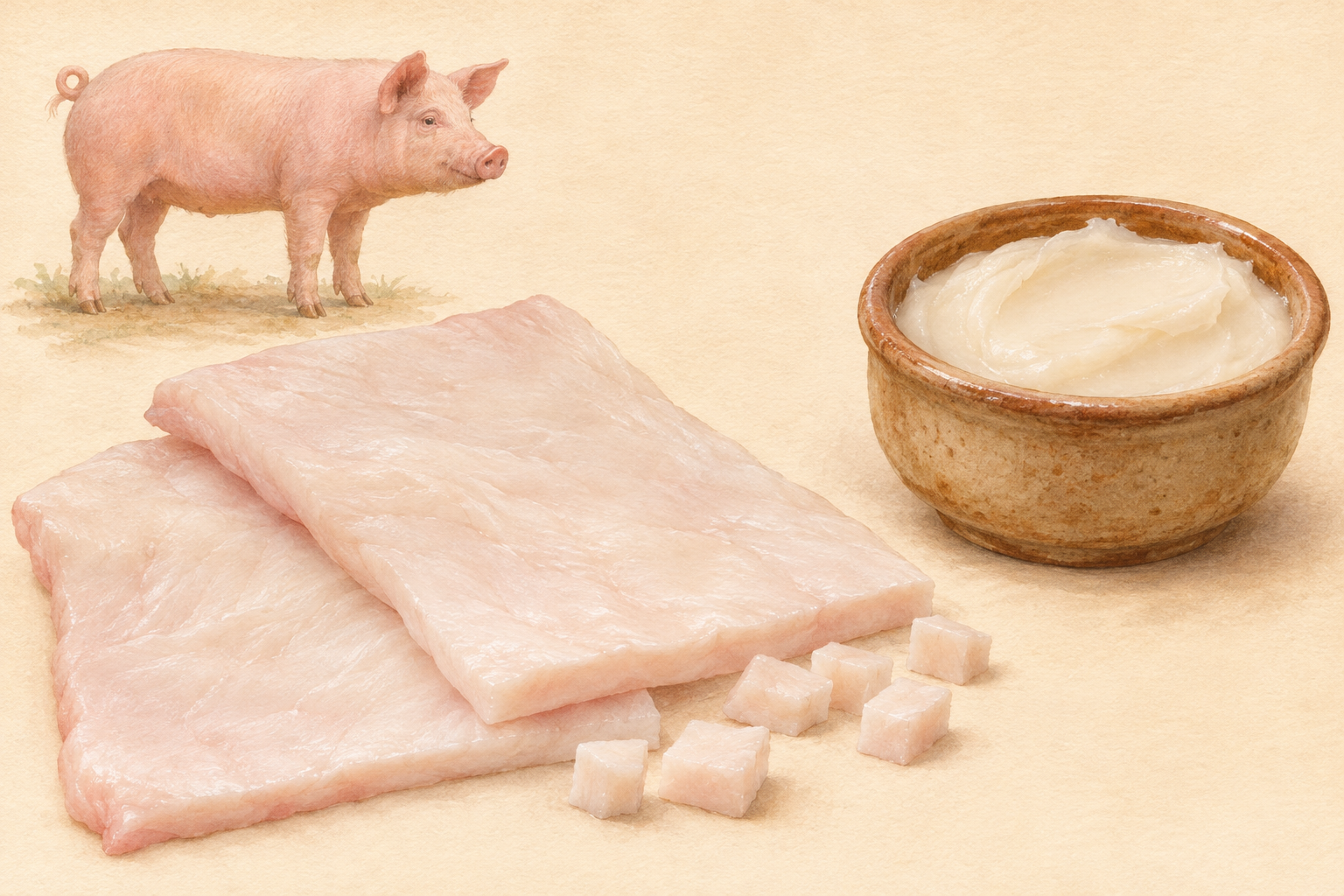
Overview
Lard is an edible fat rendered from pig fatty tissues; source tissues and refining affect flavour and hardness.
Source material
The source is food-suitable fatty tissue of Sus scrofa. Codex distinguishes lard from rendered pork fat with a broader source definition.
Composition
The main component is fat, including oleic, palmitic and stearic acids. Feeding and tissue source affect composition; whole-meat nutrition values are different.
Region
US producer Fatworks markets jarred pork cooking fat and describes baking and frying uses.
Food use
Lard serves as a frying or sautéing fat and as shortening in baking, separately from eating fatty tissue.
Extraction
Food-grade fatty tissues are heated and the liquid fat separated and filtered. Deodorisation and additives vary by product.
Safety
Choose fat manufactured for food and follow opened-product storage directions. Feed or industrial fat and recovered waste oil must not be treated as edible lard.
Sources
FAO, historical Codex animal-fat standard: https://www.fao.org/4/y2774e/y2774e05.htm AOCS, Animal Fats: https://www.aocs.org/resource/animal-fats/ Fatworks, Animal Fat FAQs: https://fatworks.com/pages/fat-faqs Fatworks, Pasture Raised Pork Lard: https://fatworks.com/products/pure-lard