THE OIL ATLAS · Private preview
Mutton tallow
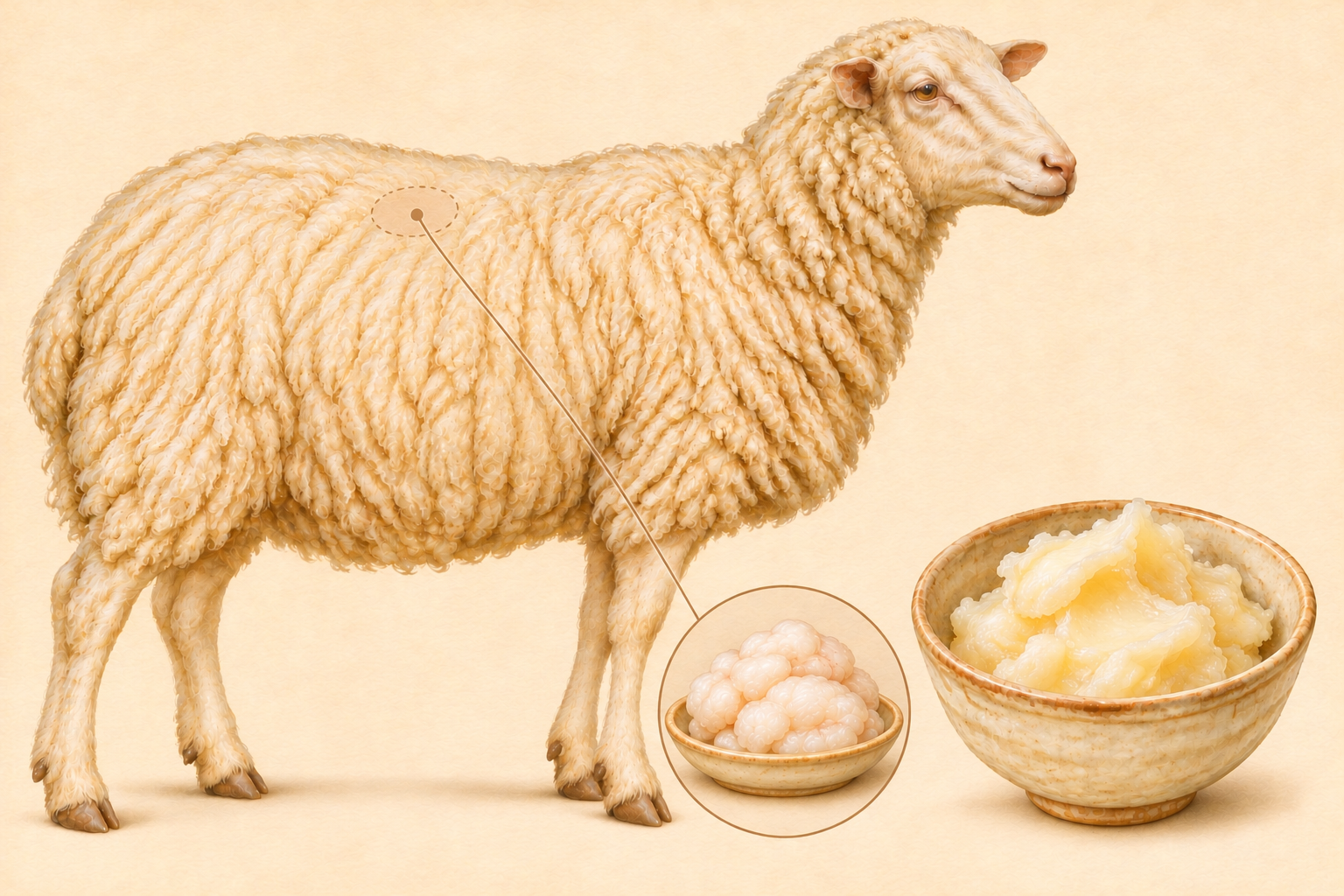
Overview
Sheep fat is a separated edible fat, sold as cooking tallow as well as occurring in fatty meat.
Source material
It comes from fatty tissues of Ovis aries. Products from young sheep are called lamb tallow.
Composition
Its main component is fat. Codex edible tallow includes cattle and sheep, so its compositional ranges are not sheep-only analytical data.
Region
US producer Fatworks markets jarred lamb tallow for cooking.
Food use
The producer describes a mild lamb flavour and uses for roasting vegetables, pan-frying meat and making savoury pies.
Extraction
It is rendered from sheep fat; tissue source and refining affect flavour and physical properties.
Safety
Choose food-grade sheep fat and follow storage directions. Industrial tallow differs from edible fat; species alone does not establish safety.
Sources
Fatworks, Grass Fed Lamb Tallow: https://fatworks.com/collections/lamb-tallow/products/grass-fed-lamb-tallow-8-0z FAO, historical Codex animal-fat standard: https://www.fao.org/4/y2774e/y2774e05.htm AOCS, Animal Fats: https://www.aocs.org/resource/animal-fats/